
OpenAI Sora 2 Development Trends: The Future Direction of AI Video Generation
OpenAI Sora 2 Development Trends: The Future Direction of AI Video Generation
If you want to understand where AI video is heading, the most important question is not just whether the output looks good today, but whether it can support real production workflows tomorrow. This article explains the practical direction of sora 2 ai video generator technology, what capabilities matter most, and how creators and product teams can prepare for the next stage of AI-generated video.
1. From Simple Clips to Structured Storytelling
Conclusion: The next major trend is moving beyond short, isolated clips toward multi-shot, narrative-ready video generation.
AI video generation is no longer only about turning a prompt into a single moving scene. The more important development is multi-shot storytelling, where a model can keep context coherent across cuts and transitions. This matters because real content rarely exists as one static shot. Marketing videos, explainers, product demos, and social storytelling often need multiple scenes that feel connected.
A modern sora 2 ai video generator workflow is expected to support:
- text-to-video generation for prompt-based scenes
- image-to-video generation for animating reference images
- multi-shot sequences with coherent scene progression
- controlled transitions and camera direction
Practical advice:
- Write prompts as a sequence of scenes, not just a single visual idea.
- Define the subject, action, camera framing, and transition intent.
- When possible, use reference images to anchor composition and style.
- For content teams, plan scripts in shot-by-shot format so AI output can map more easily to production needs.
2. Realism, Motion, and Synced Audio Are Becoming Core Expectations
Conclusion: The future standard for AI video is not only visual quality, but believable motion and synchronized audio.
One of the clearest shifts in AI video generation is the growing emphasis on realism. That includes physical movement, natural scene behavior, and audio that matches what is happening on screen. A video may look visually polished, but if the motion feels off or the sound does not align, it will still be hard to use in production.
The emerging feature set around Sora-style video generation points to three important expectations:
- Realistic motion: movement should feel physically consistent
- Synchronized audio: dialogue, sound effects, and ambience should align with the action
- Improved realism: the output should support more natural-looking scene behavior
Practical advice:
- Specify motion clearly in prompts, such as walking, turning, camera panning, or object interaction.
- If audio matters, describe the sound environment directly in the prompt.
- Test the same scene with different directions to see which one produces the most stable realism.
- Treat AI video as a controlled creative system, not just a one-click generator.
3. Text-to-Video and Image-to-Video Will Serve Different Use Cases
Conclusion: The strongest AI video platforms will support both prompt-led creation and image-led animation, because different workflows need different inputs.
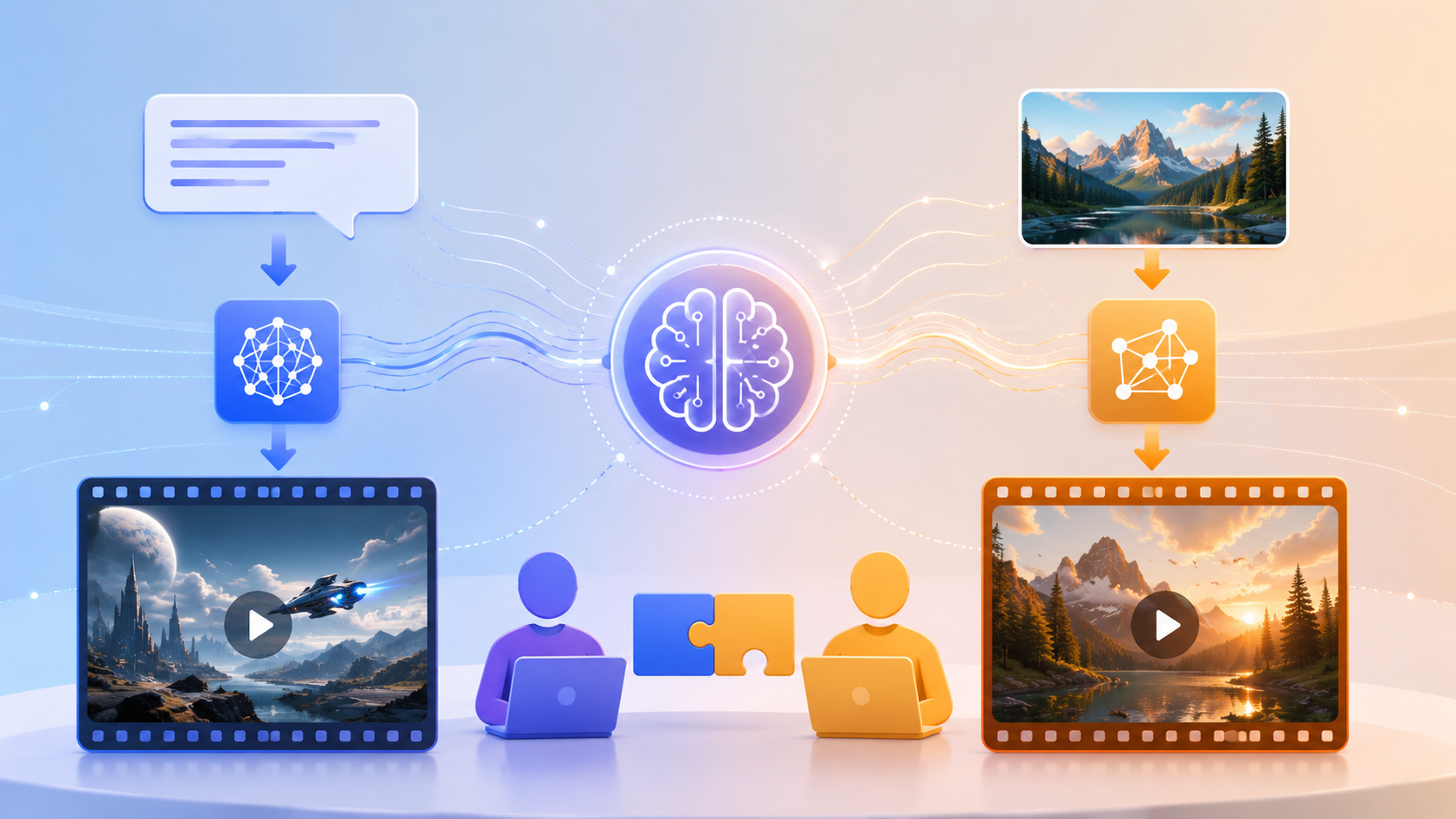
The future of video generation is not one format replacing the other. Instead, text-to-video and image-to-video will coexist as complementary tools.
Text-to-video is useful when:
- you want to generate a scene from scratch
- the concept is still in the ideation stage
- you need fast creative exploration
Image-to-video is useful when:
- you already have a design, frame, or product image
- you want consistent composition
- you need to animate a known visual direction
For teams building on top of a sora 2 ai video generator, this dual approach is important because it improves flexibility and reduces creative friction.
| Generation Mode | Best Use Case | Main Advantage | Practical Note |
|---|---|---|---|
| Text-to-video | New scene creation from prompts | Fast ideation and flexibility | Requires clearer prompt structure |
| Image-to-video | Animate an existing image or frame | Better composition consistency | Useful for product visuals and branded scenes |
| Multi-shot sequences | Story-driven content | Coherent scene progression | Plan scenes before generation |
| Synced audio output | Dialogue, SFX, ambience | More complete video experience | Describe audio cues directly |
Practical advice:
- Use text-to-video for early concept testing.
- Use image-to-video when visual consistency matters more than open-ended creativity.
- Build a workflow that lets you switch between the two depending on the project stage.
- For content operations, maintain reusable prompt templates for both modes.
4. API-First Video Generation Is Shaping Production Workflows
Conclusion: AI video is moving from a standalone creative tool to an API-driven production capability.
A major trend in video generation is the shift toward integration. Instead of only using a web app manually, teams increasingly want a production-ready API that can be embedded into their own products and workflows.
This matters because scalable content creation requires:
- predictable request handling
- job tracking and status polling
- structured outputs
- support for batching and quotas
- configurable model and aspect ratio settings
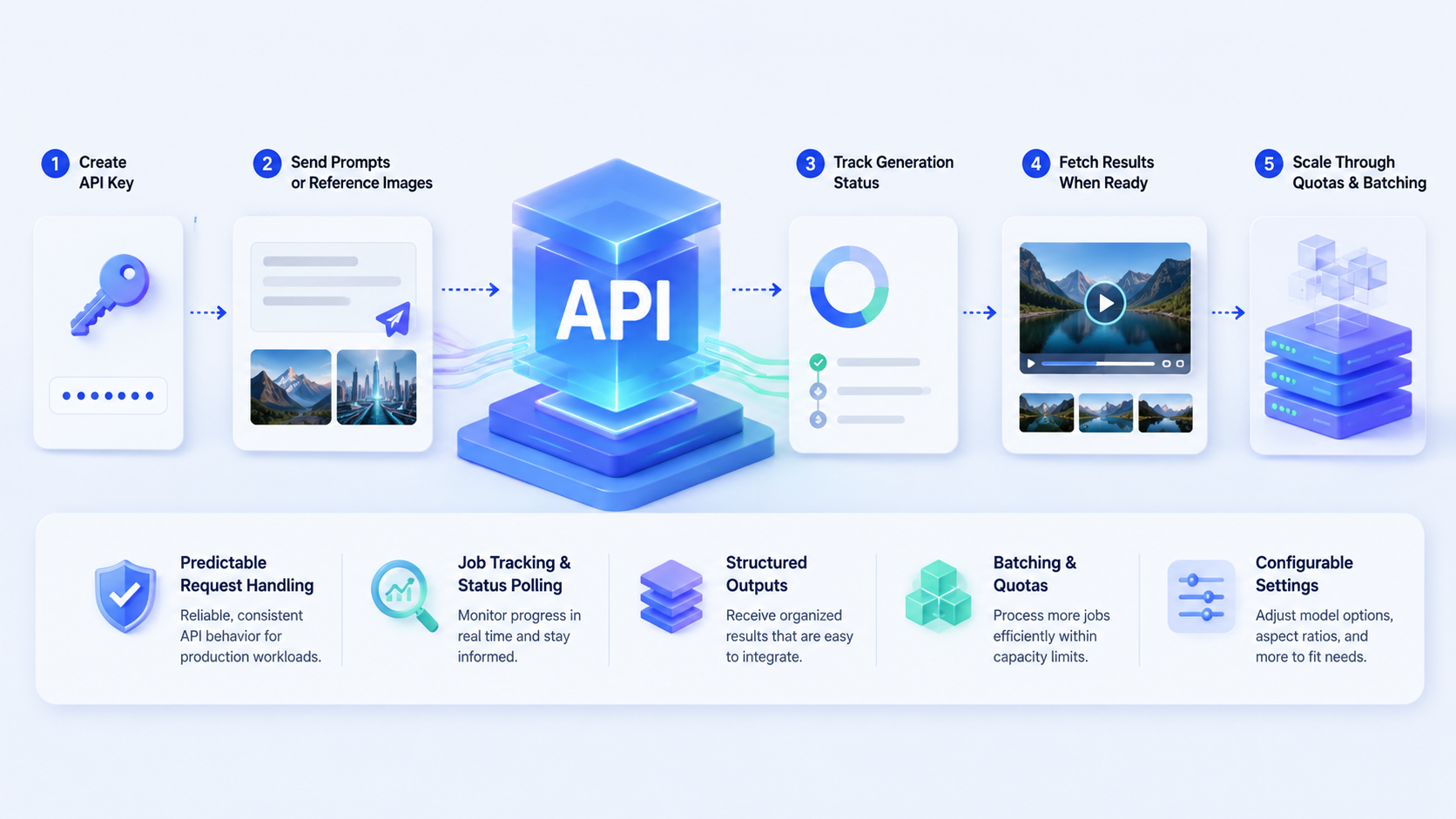
According to the reference material, a unified API approach can support:
- creating an API key
- sending prompts or reference images
- tracking generation status
- fetching results when ready
- scaling through quotas and batching
This API-first direction is one of the clearest signs of how the market is evolving. The future is not only about generating one video at a time, but about enabling repeatable video creation inside content systems.
Practical advice:
- Design your workflow around queued generation rather than instant output.
- Keep prompt structure standardized for easier testing and comparison.
- If you are building a product, expose only the controls your users actually need: model, aspect ratio, style, and camera direction.
- Plan for asynchronous operations, since production video generation typically depends on job status tracking.
5. Control, Fidelity, and Production Readiness Will Define Adoption
Conclusion: The winning AI video tools will be the ones that balance creative freedom with controllable output.
As the market matures, users will care less about novelty alone and more about whether the system is dependable. That means better control over framing, style, camera direction, and model selection. It also means higher fidelity tiers for users who need more refined results.
The reference material highlights a few production-oriented capabilities that reflect this trend:
- camera and style control
- aspect ratio selection
- model selection such as Sora2-10s
- higher-fidelity tiers such as a Pro option
- REST-style integration for production use
These are important because real users often need consistency, not just impressive demos. A sora 2 ai video generator becomes much more valuable when teams can shape the output to match brand, product, and storytelling requirements.
Practical advice:
- Set default aspect ratios based on the destination platform.
- Define prompt templates for brand-safe or product-specific generation.
- Use higher-fidelity settings only when the project needs it, since workflows should stay efficient.
- Document preferred camera language, such as close-up, wide shot, tracking shot, or static frame.
What This Means for Content Teams and Product Builders
The development trend is clear: AI video generation is moving toward structured, controllable, multi-modal production systems. The future is not just “generate a video from text.” It is:
- generate a video from text or image
- keep the scene coherent across multiple shots
- align audio with motion
- integrate the workflow through an API
- adjust fidelity and camera direction for the use case
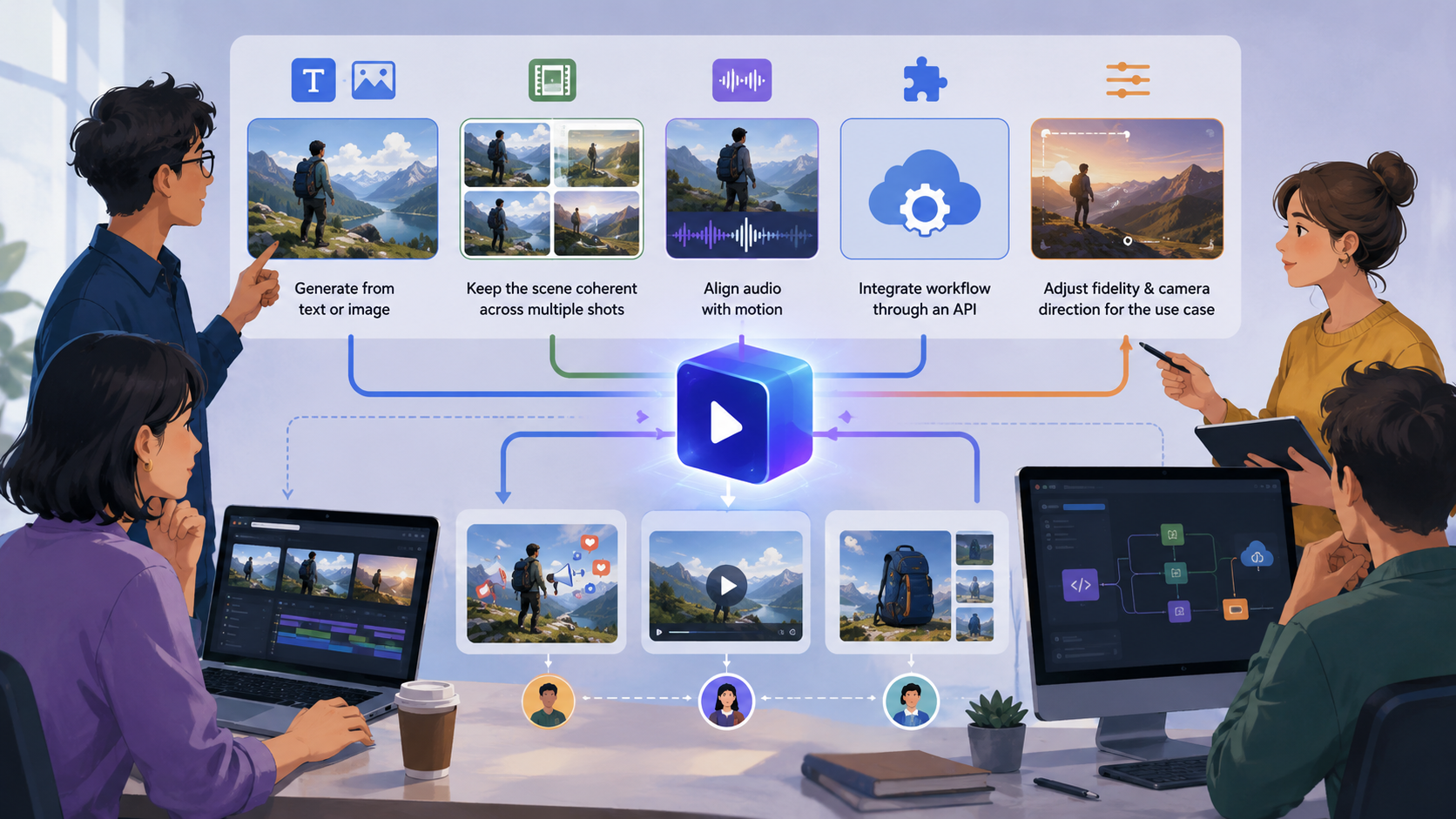
For content teams, this means AI video can increasingly support campaign assets, explainers, and social content at scale. For product builders, it means the competitive advantage will come from workflow design, prompt control, and integration quality, not only from raw generation ability.
FAQ
What is a Sora 2 AI video generator?
It is an AI video generation system designed to create video from text prompts or reference images, with features such as realistic motion, synchronized audio, and controllable camera direction.
Is text-to-video better than image-to-video?
Neither is universally better. Text-to-video is better for creating scenes from scratch, while image-to-video is better when you want to animate an existing visual with more composition consistency.
Why is synced audio important in AI video?
Synced audio makes the result more usable and believable because dialogue, sound effects, and ambience match the motion on screen.
Why does API access matter for AI video generation?
API access allows teams to integrate video generation into products and workflows, track job status, and scale content creation more efficiently.
What should I focus on when planning prompts?
Focus on scene structure, motion, camera direction, style, and audio cues. The clearer the request, the more controllable the result is likely to be.
Summary
The future direction of AI video generation is centered on five major shifts: multi-shot storytelling, more realistic motion, synchronized audio, dual-mode creation through text and images, and API-first production workflows. In that context, a sora 2 ai video generator is not just a creative toy—it is becoming a practical system for building structured, scalable, and production-ready video experiences.
If you are planning content, products, or workflows around AI video, the best strategy is to prioritize control, consistency, and integration from the start.