
Sora 2 API OpenAI: A Practical Guide from Integration to Real-World Use
Sora 2 API OpenAI: A Practical Guide from Integration to Real-World Use
If you are looking for a sora 2 api open ai solution, the key question is usually simple: how do you connect to it, what can it generate, and how do you use it reliably in production? This article gives you a clear, practical overview of Sora 2-style video generation APIs, with a focus on how to structure integration, choose the right mode, and apply it to real content workflows.
1. What the Sora 2 API Is and Why It Matters
Conclusion: A Sora 2 API is designed to turn prompts or reference images into video, making it useful for teams that want AI video generation through a programmable interface.
Explanation:
Based on the provided reference, Tikdek offers a unified API for Sora-style video generation using Sora 2 and Sora 2 Pro models. The API supports both text-to-video and image-to-video workflows, with features such as realistic motion, synchronized audio, and controllable camera direction. That means you are not just generating clips—you are building a system that can produce video content in a repeatable way.
This matters for content teams, product teams, and developers because API access gives you:
- Programmatic control over generation
- Repeatable output settings
- Integration into apps, internal tools, or content pipelines
- The ability to scale workflows beyond manual generation
Actionable advice:
- Decide whether your use case is text-to-video or image-to-video before implementation.
- Define output requirements early: aspect ratio, style, camera direction, and audio needs.
- Treat the API as part of a workflow, not just a one-off generator.
2. Core Features You Should Understand Before Integrating
Conclusion: The value of a Sora 2 API lies in a few essential capabilities: prompt-based generation, reference-image animation, multi-shot coherence, and synced audio.
Explanation:
The reference knowledge highlights several important features:
- Text-to-video generation: Create videos from natural language prompts.
- Image-to-video generation: Animate a reference image into motion.
- Multi-shot storytelling: Maintain coherence across cuts and transitions.
- Synchronized audio: Align sound effects, dialogue, or ambience with visuals.
- Camera and style control: Adjust framing, aspect ratio, and cinematic direction.
- Pro tier access: Use higher-fidelity output when needed.
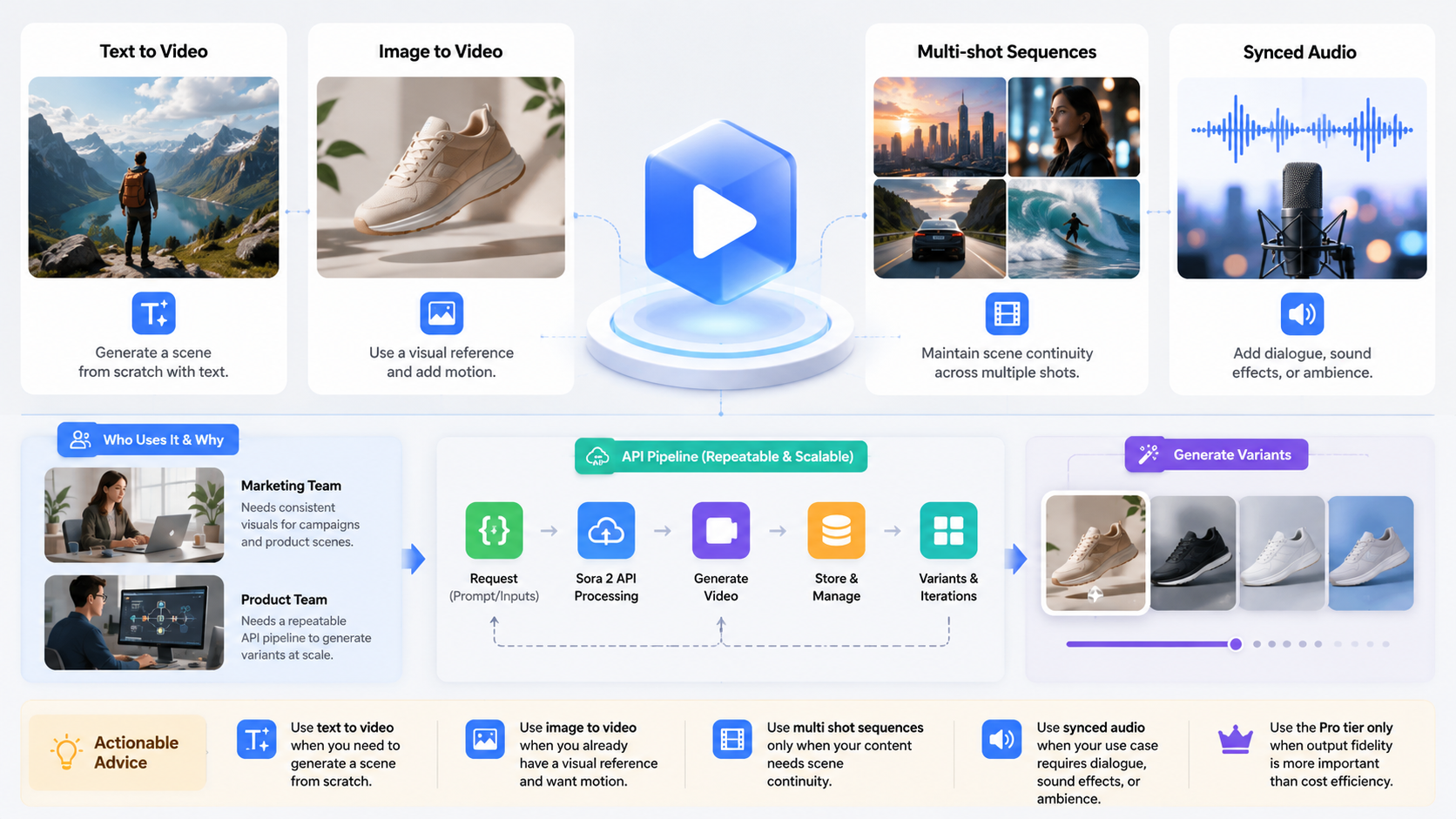
These capabilities are especially important if your content needs more than a simple short clip. For example, a marketing team may want a product scene with a consistent visual style, while a product team may need a repeatable API pipeline that can generate different variants of a concept.
Actionable advice:
- Use text-to-video when you need to generate a scene from scratch.
- Use image-to-video when you already have a visual reference and want motion.
- Use multi-shot sequences only when your content needs scene continuity.
- Use synced audio when your use case requires dialogue, sound effects, or ambience.
- Use the Pro tier only when output fidelity is more important than cost efficiency.
Quick Feature Comparison
| Feature | What It Does | Best Use Case |
|---|---|---|
| Text-to-video | Generates video from prompts | Concept scenes, creative drafts, rapid ideation |
| Image-to-video | Animates a reference image | Product visuals, branded assets, scene continuity |
| Multi-shot storytelling | Preserves coherence across cuts | Narrative content, structured sequences |
| Synchronized audio | Adds aligned sound elements | Dialogue scenes, immersive short-form content |
| Camera and style control | Adjusts framing and cinematic direction | Brand-consistent output |
| Sora 2 Pro tier | Higher-fidelity generation | Premium content needs |
3. How a Typical Integration Flow Works
Conclusion: A production-ready Sora 2 API workflow is usually straightforward: create an API key, send a prompt or image, monitor job status, and retrieve the result.
Explanation:
The reference material outlines a simple flow:
- Create an API key from the dashboard.
- Send prompts or reference images with your chosen model and settings.
- Track generation status by polling the job.
- Fetch the result when the video is ready.
- Scale usage with quotas and batching.
This is a common asynchronous API pattern. Instead of waiting for the video in a single request, you submit a generation job and later check whether it has completed. That makes it easier to handle longer generation times and larger workloads.
The reference also notes a default configuration example:
- Model selection: Sora2-10s
- Aspect ratio: 16:9 landscape
- Cost per generation: 100 credits
These details are useful when planning implementation, because model choice, video duration, and framing all affect how you design your content pipeline.
Actionable advice:
- Build your integration around a job-based workflow rather than a synchronous request.
- Store job IDs so you can check status and recover from interruptions.
- Standardize your prompt format to keep generation results more consistent.
- Set internal rules for model selection, aspect ratio, and credit usage.
- If your app will generate videos at scale, add batching and quota handling from the start.
4. Best Use Cases for Content Teams and Product Builders
Conclusion: A Sora 2 API is most useful when you need repeatable AI video generation inside a product, workflow, or content production process.
Explanation:
From the feature set, the most practical use cases include:
- Marketing content generation
- Social media video concepts
- Product demonstrations
- Creative storyboarding
- Motion-based content experiments
- Reference-image animation for brand assets
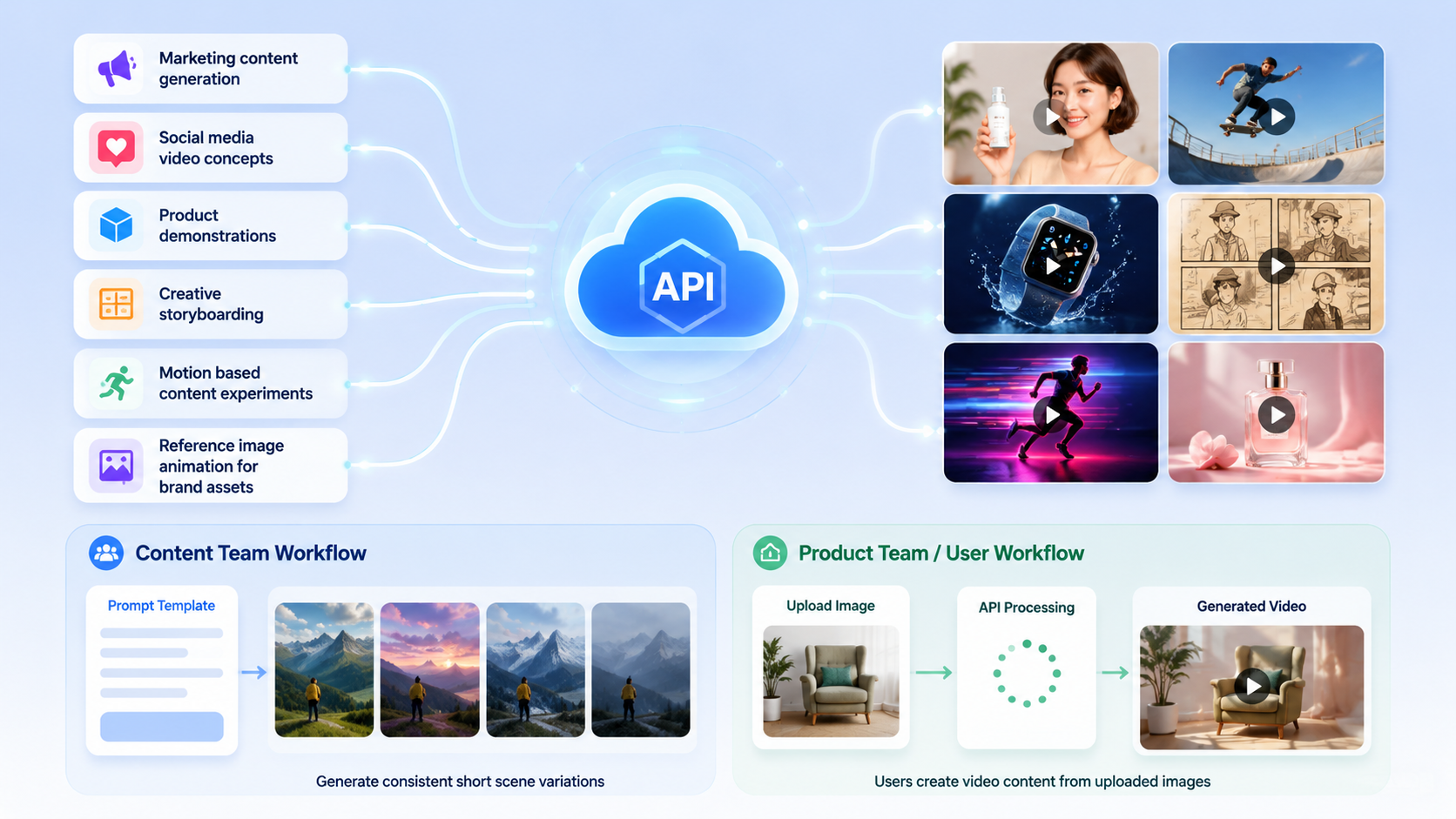
The main advantage of API access is consistency. Instead of manually producing each clip, you can create a repeatable process for your team or application. For example, a content team might generate short scene variations from a standard prompt template, while a product team may use the API to let users create video content from uploaded images.
However, the right use case depends on the quality you need and how much control you want over motion, camera direction, and sound.
Actionable advice:
- Use the API for structured content workflows, not just one-off experiments.
- Create prompt templates for recurring scenes or formats.
- Test both text-to-video and image-to-video to see which fits your production flow.
- Reserve higher-fidelity options for content that needs premium polish.
- Document your internal generation settings so your team can reproduce results.
5. Practical Notes on Cost, Control, and Production Planning
Conclusion: To use the sora 2 api open ai workflow effectively, you should plan around output control, generation cost, and operational scaling.
Explanation:
The reference mentions one configuration example with a 100-credit generation cost for a Sora2-10s model in 16:9 format. While that does not define a universal pricing structure, it does show why cost planning matters. Video generation is often more resource-intensive than text or image tasks, so teams should think in terms of usage patterns and output priorities.
Control is equally important. The reference highlights the ability to specify:
- Camera direction
- Framing
- Aspect ratio
- Cinematic style
- Story continuity
- Audio alignment
These controls help ensure that generated output fits your brand or product requirements. In practice, the more precise your prompt and settings, the more stable your results are likely to be.
Actionable advice:
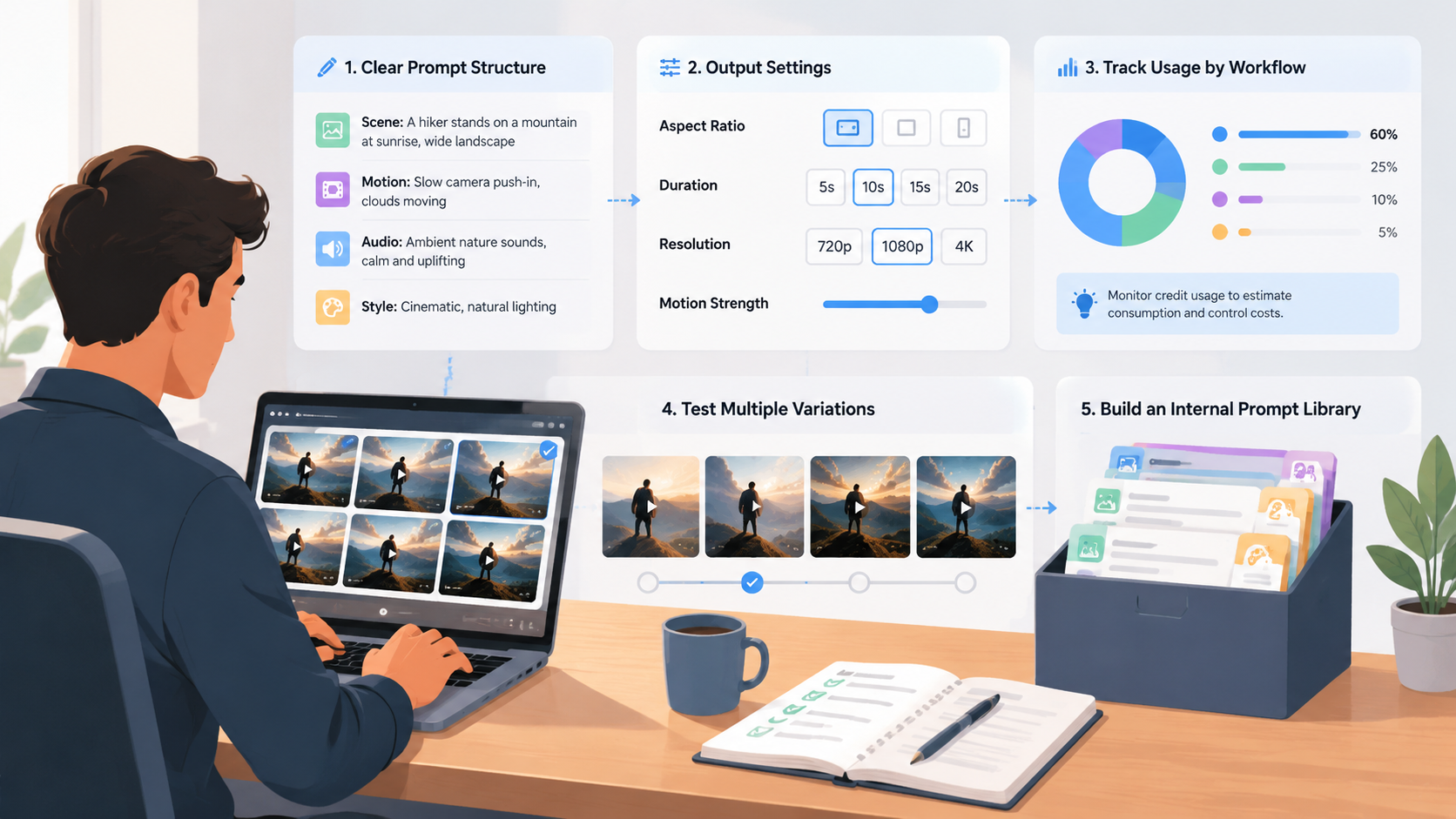
- Define a default output format for your team, such as aspect ratio and duration.
- Use clear prompt structures that describe scene, motion, and audio expectations.
- Track credit usage by workflow so you can estimate consumption more accurately.
- Test multiple prompt variations before rolling the API into production.
- Keep a small internal library of prompts that already work well.
FAQ
What is the Sora 2 API used for?
It is used to generate video through an API, typically from text prompts or reference images. It supports workflows like text-to-video and image-to-video.
Does the API support audio?
Yes. The reference describes synchronized audio, including sound effects, dialogue, and ambience aligned with the visuals.
Can I use the API for multi-shot scenes?
Yes. One of the listed features is multi-shot storytelling, which helps maintain coherence across cuts and transitions.
What settings can I control?
You can control model selection, aspect ratio, camera direction, framing, and style direction. These settings help shape the final output.
Is this suitable for production use?
The reference mentions API integration, quotas, batching, and production-ready responses, which suggests it is designed to support production workflows.
Summary
If you are evaluating a sora 2 api open ai solution, the main idea is simple: you want a programmable way to generate video with control, consistency, and scalability. The reference material shows a workflow centered on text-to-video, image-to-video, multi-shot storytelling, synced audio, and camera/style control.
The most practical approach is to:
- Choose the right generation mode
- Standardize prompts and output settings
- Use asynchronous job handling
- Plan for credits and scaling
- Test workflows before production rollout
For teams building content tools or AI video features, the Sora 2 API model is valuable because it turns video generation into an integrated process instead of a manual task.