
Sora v2 Hands-On Report: Visual Quality, Stability, and Generation Efficiency
Sora v2 Hands-On Report: Visual Quality, Stability, and Generation Efficiency
If you are evaluating sora 2 api 2026 for a production workflow, the key questions are straightforward: Does the output look good enough? Is generation stable enough for repeated use? And is the process efficient enough to justify integration? This article gives a practical, content-strategy-friendly assessment of those concerns based on the available product information, so you can judge whether Sora 2-style video generation fits your use case.
1. What Sora 2 API Is Designed to Do
Conclusion: Sora 2 API is positioned as a unified video generation interface for text-to-video and image-to-video workflows, with support for realistic motion and synchronized audio.
The available product information shows a clear focus on two core generation modes:
- Text-to-video for turning prompts into moving scenes
- Image-to-video for animating reference images into consistent motion
It also emphasizes features that matter for real production use, including:
- realistic motion
- synced audio
- controllable camera direction
- multi-shot storytelling
- production-ready REST integration
For teams building content tools or AI video experiences, this matters because it suggests the API is not just a demo endpoint. It is intended to support workflows where framing, scene continuity, and output consistency are part of the product requirement.
Practical recommendation:
If your project needs more than a single-shot novelty clip, prioritize API workflows that support camera control, multi-shot sequencing, and image-to-video inputs. Those capabilities are the most useful when building repeatable content systems.
2. Visual Quality: What You Can Reasonably Expect
Conclusion: The strongest quality signals in the available documentation are realism, motion consistency, and synchronized audio rather than pure cinematic benchmark claims.
The reference material highlights:
- improved physical realism
- consistent motion and composition
- synchronized sound effects or dialogue
- camera and style control
- higher-fidelity output through a Sora 2 Pro tier
That means the quality discussion should focus on practical output traits:
-
Motion realism
The model is described as producing realistic motion, which is important for avoiding stiff or unnatural animation. -
Scene coherence
Multi-shot storytelling support indicates the system is designed to keep context across cuts and transitions. -
Audio alignment
Synchronized audio can improve the final viewing experience, especially for dialogue-driven or action-oriented clips.
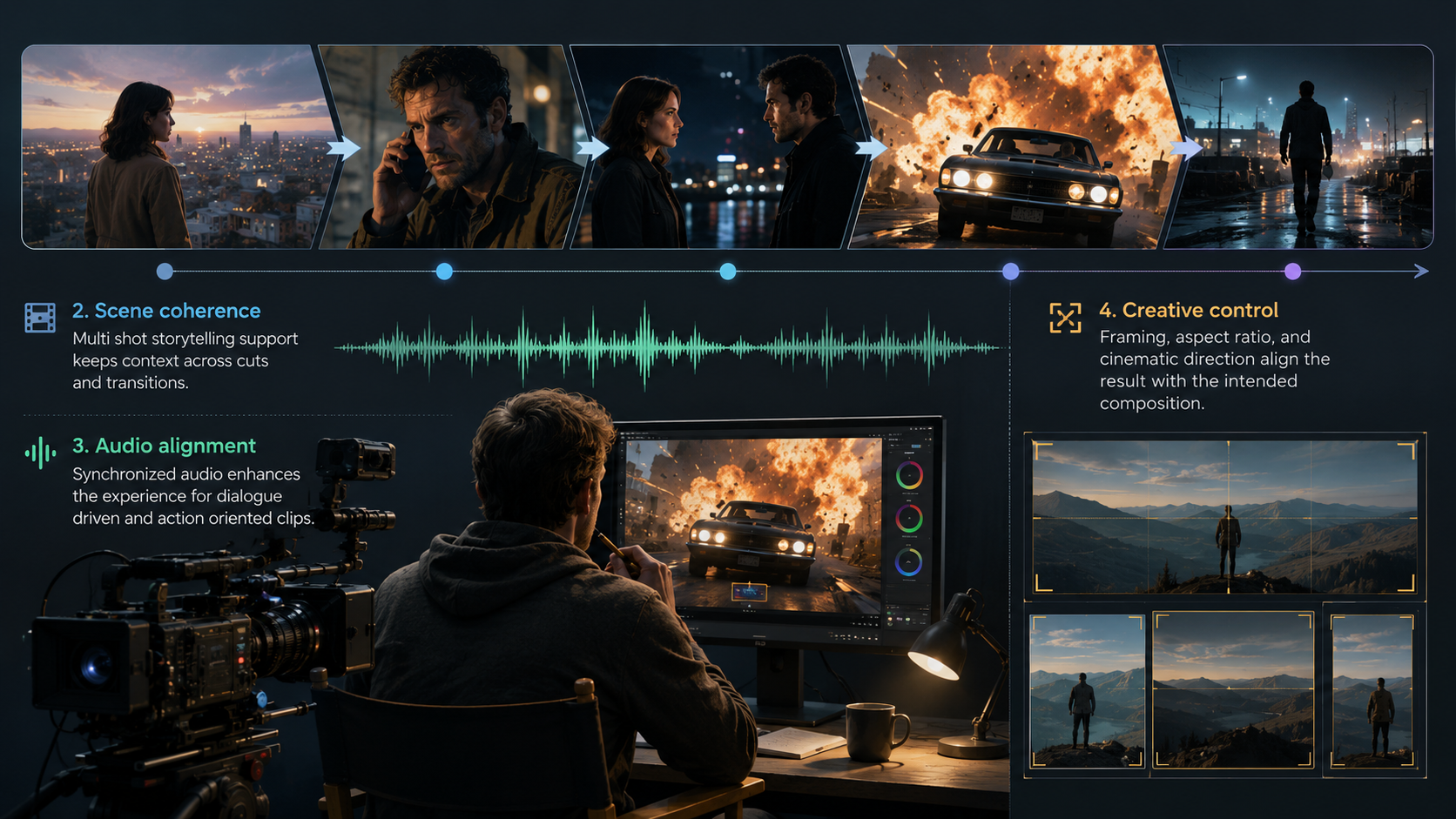
- Creative control
Framing, aspect ratio, and cinematic direction can help align the result with the intended composition.
Quick quality checklist
| Quality Area | What the Documentation Suggests | Why It Matters | Action to Take |
|---|---|---|---|
| Motion realism | Realistic motion is a core feature | Reduces unnatural movement | Test prompts with complex movement |
| Scene coherence | Multi-shot storytelling is supported | Helps with narrative continuity | Try multi-shot prompts early |
| Audio sync | Dialogue, SFX, and ambience can align with action | Improves perceived quality | Include audio-dependent scenes in testing |
| Camera control | Framing and cinematic direction are adjustable | Better visual composition | Compare different aspect ratios and directions |
| Higher fidelity | Pro tier is available | Useful for demanding output | Reserve for premium use cases |
Practical recommendation:
Evaluate quality with prompts that reflect your actual use case, not only idealized samples. If your content depends on dialogue timing, scene transitions, or a specific visual framing, those should be part of your test set.
3. Stability and Workflow Reliability
Conclusion: The workflow appears designed for operational reliability, with API key setup, job status polling, and quota-based scaling.
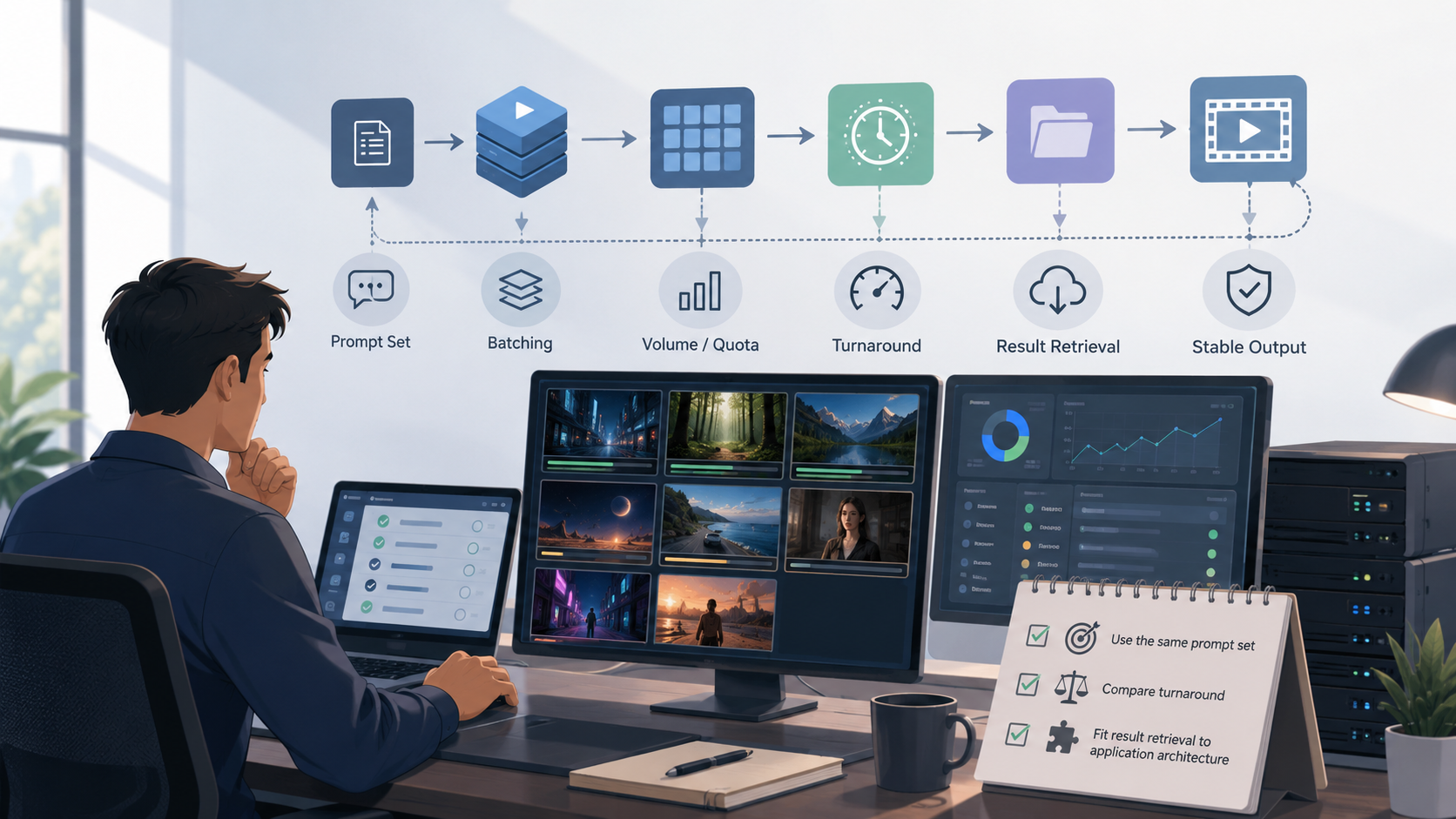
The documentation describes a standard production-style flow:
- Create an API key
- Send prompts or reference images
- Track generation status
- Fetch results when ready
- Scale using quotas and batching
This is a strong sign that the system is built for asynchronous video generation rather than instant response-only use. For video models, that matters because stability is not only about whether generation succeeds once, but whether the workflow can be repeated predictably.
What to look for in stability testing
-
Consistency of job completion
Repeated requests should behave predictably in status polling and result retrieval. -
Prompt handling reliability
The API should accept both text and image inputs without requiring special workarounds. -
Output consistency across runs
Similar prompts should produce outputs that remain within the expected creative range. -
Operational fit for batching
If you need volume, quota and batching support are important for production planning.
Practical recommendation:
Build a small internal test plan before production use. Use the same prompt set repeatedly, compare turnaround behavior, and confirm that result retrieval fits your application’s architecture. For content platforms, stability is as important as visual quality.
4. Generation Efficiency and Production Fit
Conclusion: Efficiency is less about instant generation and more about how well the API fits a repeatable production pipeline.
The reference material gives one concrete configuration example:
- Model: Sora2-10s
- Aspect ratio: 16:9
- Cost per generation: 100 credits
While that is not enough to benchmark performance speed numerically, it does tell us something important: the platform uses a controlled generation model with explicit configuration and consumption cost. That makes efficiency a planning question for teams deciding how many iterations they can afford and how they will structure production usage.
Efficiency considerations
-
Iteration cost
Every generation has a cost, so prompt refinement matters. -
Preset configuration
A defined model and aspect ratio make it easier to standardize workflows. -
API-first integration
REST endpoints with production-ready responses are easier to automate than manual tools. -
Batching support
Useful when generating multiple clips for a campaign, template system, or content pipeline.
Best practices for better efficiency
- Start with a concise prompt that includes subject, action, camera direction, and environment.
- Reuse successful prompt structures across similar content requests.
- Test one aspect ratio and one style direction first before expanding variations.
- Use image-to-video when you need stronger control over composition.
- Reserve higher-fidelity tiers for cases where output quality clearly justifies the cost.
Practical recommendation:
Treat prompt design as part of cost control. In a usage-based system, better prompt structure reduces wasted generations and helps you reach acceptable output faster.
5. Best Use Cases for Sora 2 API in 2026
Conclusion: The API is best suited for teams that need controllable AI video generation with audio, scene continuity, and scalable integration.
Based on the documented feature set, the most relevant use cases include:
- marketing content generation
- product storytelling clips
- social media video automation
- concept visualization
- prototype video experiences
- AI-powered creative tools
These use cases benefit from the combination of text-to-video, image-to-video, synced audio, and camera control.
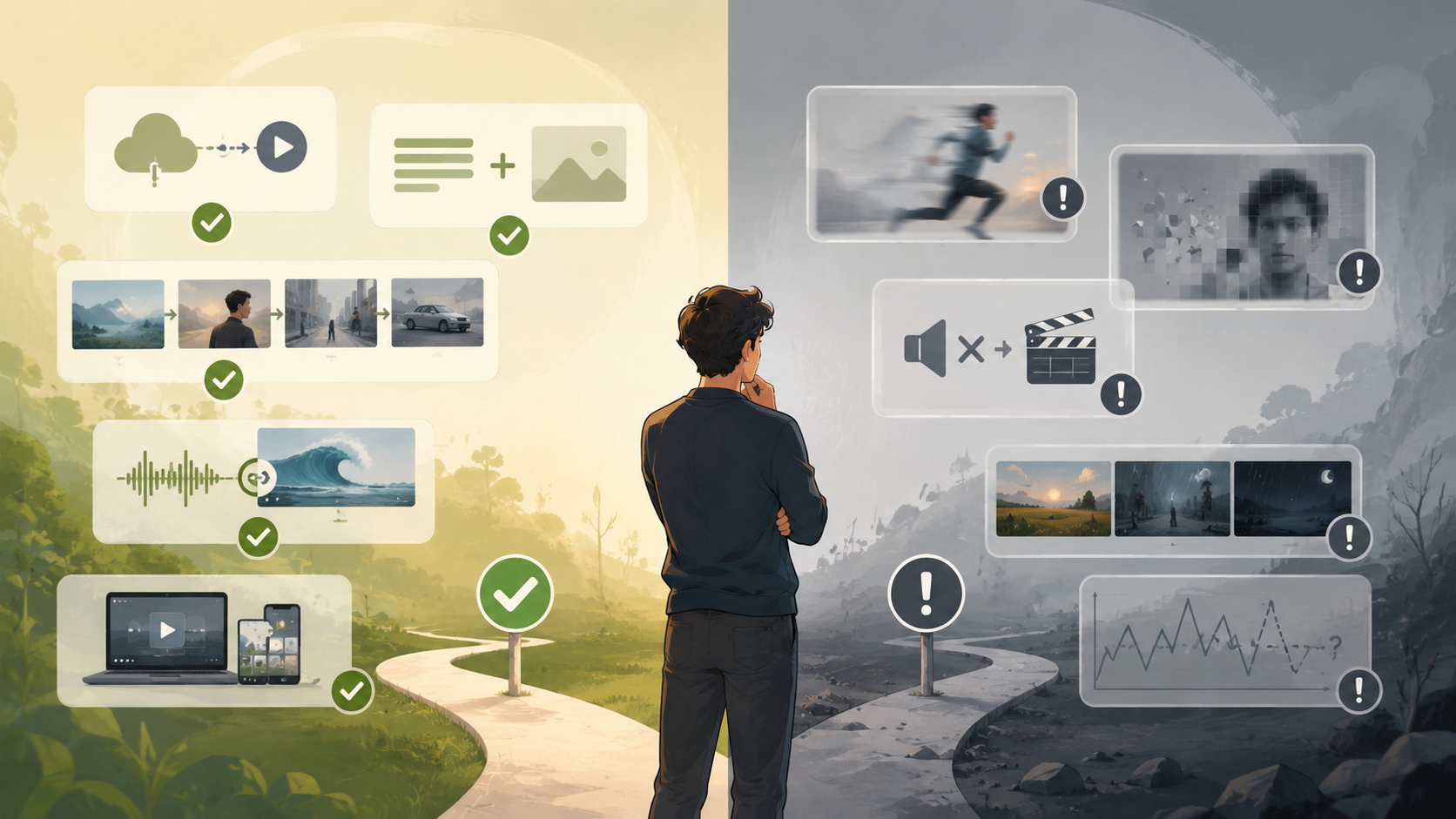
When it is a strong fit
- You need a unified API for video generation
- You want to support both prompts and reference images
- You need multi-shot or narrative-style outputs
- You want audiovisual alignment rather than silent motion only
- You are building a product, not just making one-off clips
When to be cautious
- You need guaranteed deterministic output
- You want near-instant interactive rendering
- You have very tight cost constraints per iteration
- Your workflow depends on highly specialized editorial control
Practical recommendation:
Use Sora 2 API as a production-oriented creative engine, not as a replacement for every video workflow. It is most valuable when automation, realism, and creative flexibility are all required.
FAQ
What is sora 2 api 2026 used for?
It is used for AI video generation workflows, including text-to-video and image-to-video creation, with support for realistic motion, camera direction, and synchronized audio.
Does the API support both prompts and images?
Yes. The documented feature set includes both text-to-video and image-to-video generation.
Can it handle multi-shot storytelling?
Yes. Multi-shot sequences are explicitly listed as a feature, with support for maintaining coherence across cuts and transitions.
Is audio included in the output?
The documentation states that synchronized audio is supported, including dialogue, sound effects, and ambience aligned to the action.
Is this suitable for production systems?
The API is described with production-oriented features such as API keys, status polling, quotas, batching, and REST endpoints, which makes it suitable for integration-oriented workflows.
Summary
For teams evaluating sora 2 api 2026, the most important takeaway is that the platform is designed around practical video production needs: realistic motion, image-to-video and text-to-video workflows, synchronized audio, and API-based integration.
From a strategy perspective:
- Quality is strongest where motion realism, scene coherence, and audio alignment matter.
- Stability depends on a clear asynchronous workflow with job tracking and repeated testing.
- Efficiency comes from good prompt design, standardized configurations, and batching-friendly usage.
If your goal is to build a scalable AI video feature or content pipeline, Sora 2 API is worth evaluating through a structured test plan rather than a single demo.